

1. What Is an Achromatic Lens?
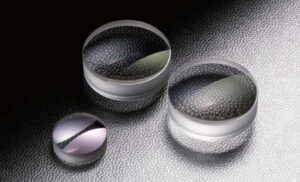
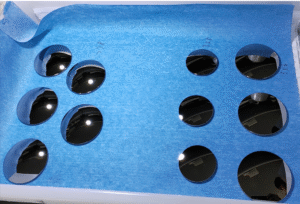
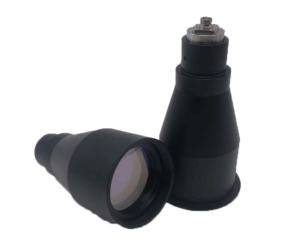
An achromatic lens, also called an achromat, is a compound optical lens designed to reduce chromatic aberration by combining two or more optical elements made from materials with different dispersion properties.
Unlike a conventional single-element lens, which focuses different wavelengths of light at slightly different positions, an achromatic lens brings two selected wavelengths to approximately the same focal point. This improves image sharpness, contrast, and color accuracy across a wider spectral range.
Most conventional achromatic lenses consist of two optical elements:
- A positive lens, typically made from low-dispersion crown glass.
- A negative lens, typically made from high-dispersion flint glass.
By carefully selecting the optical materials, refractive indices, Abbe numbers, and surface curvatures, optical designers can compensate for the wavelength-dependent focusing errors produced by each individual element.
Achromatic optics are widely used in telescopes, microscopes, cameras, laser systems, spectrometers, and industrial imaging equipment.
At BOTE Optics, we provide custom optical components and lens assemblies for precision imaging and laser applications. Our optical engineering and manufacturing capabilities support customized lens configurations, including spherical, cylindrical, and aspherical optical components.
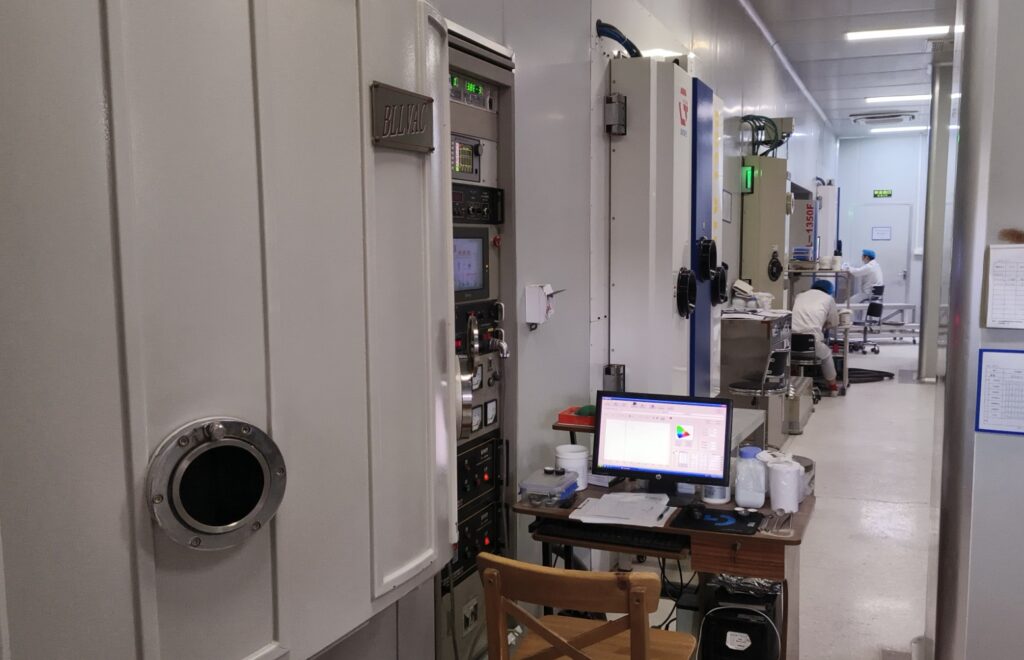
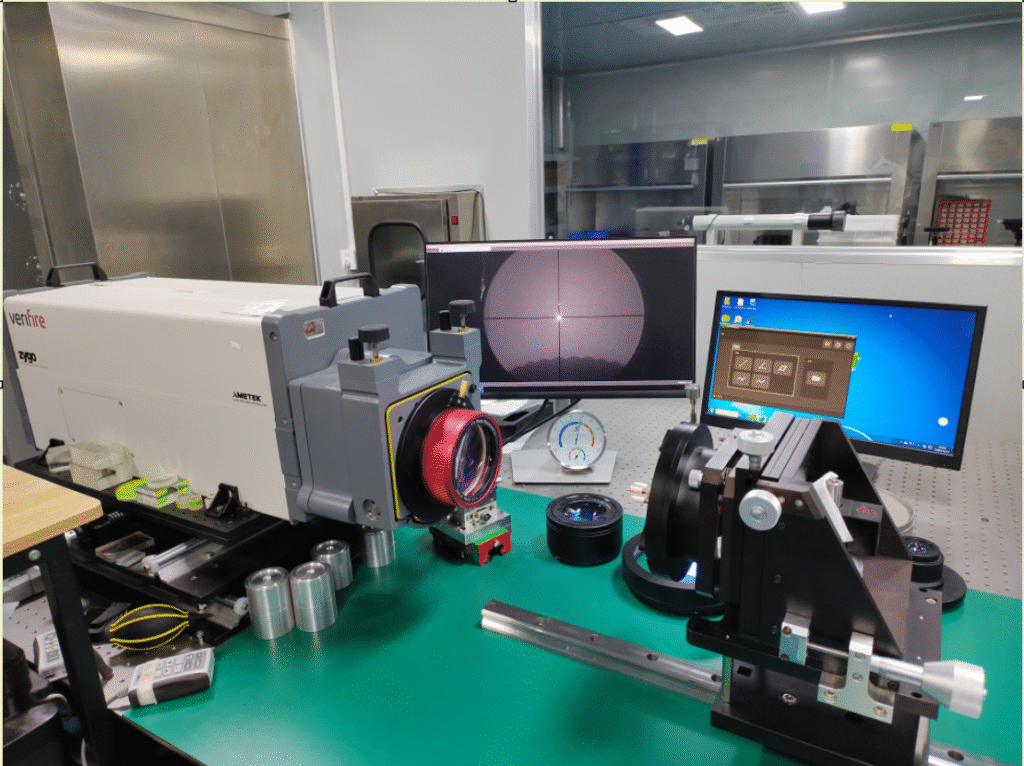
- Inspection Equipment List and Metrology of Bote Optics
- Introduction of BOTE Key Equipment
- Catalog of Precision Optics
- Catalog of Imaging Optics
- ISO9001-2015 Certified
2. What Causes Chromatic Aberration?
To understand how an achromatic lens works, it is important to understand chromatic aberration.
Chromatic aberration is caused by the dispersion of optical materials. When white light passes through a conventional lens, its different wavelengths experience different refractive indices.
In most transparent optical glasses, shorter wavelengths, such as blue light, are refracted more strongly than longer wavelengths, such as red light.
As a result:
- Blue light generally focuses closer to a positive lens.
- Red light generally focuses farther from the lens.
- Green light focuses somewhere between them.
This difference in focal position creates color fringes, blurred edges, and reduced image contrast.
There are two major forms of chromatic aberration:
Longitudinal Chromatic Aberration (Axial Color)
Different wavelengths focus at different positions along the optical axis. This produces colored blur around an image point and reduces focusing accuracy.
Lateral Chromatic Aberration (Transverse Color)
Different wavelengths produce slightly different image magnifications. This causes color fringes, particularly toward the edges of an image.
A properly designed achromatic lens primarily corrects primary axial chromatic aberration at two selected wavelengths. Its design can also reduce lateral color, depending on the optical configuration and conjugate conditions.
3. How Do Achromatic Lenses Work?
Achromatic lenses work by combining optical materials with different dispersion characteristics.
The positive element usually has a relatively high Abbe number, meaning lower dispersion. The negative element has a lower Abbe number, meaning higher dispersion.
Although the two elements produce opposite optical powers, their chromatic contributions can be balanced.
For example, when blue light is refracted more strongly by the positive element, the negative element provides a compensating chromatic effect. The optical designer adjusts the powers and curvatures of both elements until two selected wavelengths share approximately the same focal position.
This is the fundamental principle behind an achromatic combination of lenses.
The Role of the Abbe Number
The Abbe number is an important parameter in selecting optical materials for achromatic lens design.
It describes the relative dispersion of an optical material and is commonly calculated using:
Vd = (nd − 1) / (nF − nC)
Where:
- Vd = Abbe number.
- nd = Refractive index at the helium d-line (587.6 nm).
- nF = Refractive index at the hydrogen F-line (486.1 nm).
- nC = Refractive index at the hydrogen C-line (656.3 nm).
A higher Abbe number generally indicates lower dispersion, while a lower Abbe number indicates higher dispersion.
By combining glasses with different Abbe numbers, optical designers can balance chromatic dispersion and achieve the desired focal length.
Achromatic Doublet Formula
For two thin lenses in contact, the first-order achromatic condition can be expressed as:
φ = φ1 + φ2
φ1 / V1 + φ2 / V2 = 0
Where:
- φ = Total optical power of the achromatic combination.
- φ1 = Optical power of the first lens.
- φ2 = Optical power of the second lens.
- V1 and V2 = Abbe numbers of the respective optical materials.
The individual lens powers can be calculated as:
φ1 = φ × V1 / (V1 − V2)
φ2 = −φ × V2 / (V1 − V2)
Optical power is the reciprocal of focal length when focal length is expressed in meters.
These equations provide a starting point for designing an achromatic doublet. Actual lens design also requires consideration of lens thickness, surface curvature, glass compatibility, spherical aberration, coma, manufacturing tolerances, and operating wavelength.
For air-spaced systems, the separation between optical elements must also be included in the optical design.
Types of Achromatic Lenses We Offer
| Lens Type | Description |
|---|---|
| Achromatic Doublet | Two lenses (typically crown and flint glass) cemented together to correct color |
| Achromatic Triplet | Three-element design for higher correction, ideal for demanding applications |
| Large Achromatic Lens | Custom diameters available up to 200 mm, perfect for telescopes and cameras |
| Achromatic Cylindrical Lens | Corrects chromatic aberration in one axis—used in laser shaping |
| Achromatic Close-up Lens | Used in photography and inspection optics for macro enhancement |
| Achromatic Barlow Lens | Popular in telescopes to magnify without chromatic distortion |
| Achromatic Aspheric Lens | Combines aspheric surface with achromatic correction for high-precision optics |
| Achromatic Macro Lens | Designed for short working distances and high magnification with no color shift |
5. Cemented vs. Air-Spaced Achromats
One of the most important design decisions when selecting an achromatic doublet is whether to use a cemented or air-spaced configuration.
Both designs can provide effective chromatic correction, but their mechanical structure, transmission, thermal behavior, and laser damage performance are different.
Cemented Achromatic Doublet
A cemented achromat consists of two optical elements bonded together using optical adhesive.
The cemented interface reduces the number of air-to-glass surfaces and creates a compact optical assembly.
Advantages:
- Compact mechanical structure.
- Fewer air-to-glass interfaces.
- Reduced reflection losses at the bonded interface.
- Convenient assembly and alignment.
- Generally cost-effective for standard optical systems.
Limitations:
- Optical adhesive may limit operating temperature.
- Adhesive can affect long-term environmental stability.
- High-power laser applications may require additional consideration of absorption and laser-induced damage.
- Large-aperture assemblies may require careful thermal and mechanical design.
Air-Spaced Achromatic Doublet
An air-spaced achromat consists of two separate optical elements with a controlled air gap between them.
The additional air space provides more freedom for optical designers to adjust the system’s aberration balance.
Advantages:
- Greater flexibility in optical optimization.
- No optical cement between the elements.
- Suitable for designs requiring higher laser damage resistance when appropriate materials and coatings are selected.
- Better control of certain spherical aberration and imaging performance trade-offs.
Limitations:
- More demanding mechanical alignment.
- Additional air-to-glass interfaces.
- Potentially higher reflection losses without effective AR coatings.
- More complex assembly and mounting requirements.
Which Configuration Should You Choose?
| Selection Factor | Cemented Achromat | Air-Spaced Achromat |
|---|---|---|
| Mechanical Structure | Compact | More complex |
| Assembly | Relatively simple | Requires precise spacing and alignment |
| Optical Design Flexibility | More limited | Greater |
| Reflection Losses | Generally lower | More surfaces require AR coatings |
| Thermal Considerations | Adhesive limitations | No cemented interface |
| High-Power Laser Use | Requires adhesive evaluation | Often preferred for demanding designs |
| Manufacturing Cost | Generally lower | Generally higher |
The best configuration depends on the operating wavelength, laser power, environmental conditions, aperture, and required optical performance.
🔗 Learn more about custom optical lens services at Bote.
6. Achromatic and Apochromatic Lenses: What Is the Difference?
Achromatic and apochromatic lenses are both designed to reduce chromatic aberration, but they provide different levels of color correction.
An achromatic lens is typically corrected to bring two selected wavelengths to a common focus.
An apochromatic lens is designed to bring three wavelengths to a common focus or achieve an equivalent higher level of chromatic correction, depending on the optical design criteria. It also typically provides better control of secondary spectrum.
A superachromatic lens takes chromatic correction further and is designed to control color errors across four or more selected wavelengths.
| Optical Design | Chromatic Correction | Typical Applications |
|---|---|---|
| Achromat | Two selected wavelengths | General-purpose imaging |
| Apochromat | Three selected wavelengths | High-resolution microscopy and astronomy |
| Superachromat | Four or more selected wavelengths | Advanced multispectral imaging |
An apochromatic design is not always necessary. For many industrial and scientific systems, a properly optimized achromatic doublet offers sufficient performance at a more economical cost.
7. What Is an Achromatic Lens Used For?
Achromatic lenses are used in optical systems where wavelength-dependent focusing errors can reduce image quality or measurement accuracy.
7.1 Achromatic Lens for Telescope Systems
Telescope objectives use achromatic lenses to improve image sharpness and reduce colored fringes around bright objects.
An achromatic doublet is a common objective design in refracting telescopes. It combines positive and negative lens elements to bring selected wavelengths into a common focus.
Achromatic Barlow lenses are also used in some telescope systems to increase effective magnification.
For larger telescopes, a large achromatic lens may be required to provide a larger clear aperture and sufficient light collection.
Important design parameters include:
- Clear aperture.
- Effective focal length.
- F-number.
- Residual chromatic aberration.
- Surface accuracy.
- Wavefront error.
- Anti-reflection coating performance.
7.2 Achromatic Objective Lenses for Microscopy
Microscope objective lenses require accurate focusing and high image contrast.
Achromatic objective lenses are designed to reduce color-related image errors, making them useful in biological microscopy, laboratory inspection, and industrial measurement.
Depending on the application, designers may select achromatic, plan achromatic, or apochromatic objectives.
A plan achromatic objective, often called a Plan Achromat, combines chromatic correction with improved field flatness. It is designed to maintain better focus across the image field, rather than only near the optical axis.
This is especially useful in microscopy, where a flat and consistent image is important for observing samples across a wide field.
7.3 Achromatic Lenses for Laser Systems
Laser systems may use multiple wavelengths or require accurate beam focusing over a defined spectral range.
Achromatic doublets and cylindrical achromats can help reduce wavelength-dependent focal shifts.
Typical applications include:
- Laser beam focusing.
- Laser scanning.
- Optical alignment.
- Beam shaping.
- Laser measurement systems.
For high-power laser systems, the designer must also consider laser-induced damage threshold (LIDT), coating absorption, surface quality, and thermal effects.
7.4 Achromatic Close-Up Lenses
Achromatic close-up lenses are used in photography and optical inspection to reduce color fringes when imaging objects at short working distances.
They are commonly used as supplementary close-up optics in front of camera lenses.
Compared with simple single-element close-up lenses, achromatic designs provide improved color correction and better image quality, particularly in macro photography.
7.5 Spectrometers and Analytical Instruments
Achromatic optics are useful in spectrometers and analytical instruments where different wavelengths must be focused consistently.
They can improve optical throughput and reduce wavelength-dependent focusing errors in selected optical configurations.
8. Achromatic Combination of Prisms
Chromatic correction is not limited to lenses.
An achromatic combination of prisms uses two or more prisms made from optical materials with different dispersion properties.
The prisms are arranged so that their angular dispersion contributions compensate for one another while maintaining the required beam deviation.
A common example is an achromatic prism pair, which is designed to reduce unwanted spectral spreading while preserving a specified deviation angle.
Achromatic prism combinations are used in:
- Spectroscopic instruments.
- Optical beam steering.
- Imaging systems.
- Dispersion compensation.
- Scientific optical equipment.
Although the design principle is related to achromatic lenses, prism combinations control angular dispersion rather than focusing different wavelengths to a common image plane.
9. Materials and Optical Coatings for Achromatic Lenses
Material selection is one of the most important stages in achromatic lens design.
The optical designer must consider refractive index, Abbe number, partial dispersion, transmission range, thermal properties, and compatibility with the intended manufacturing process.
Common material choices include:
- Crown Glass: Often used as the positive, low-dispersion element.
- Flint Glass: Often used as the negative, higher-dispersion element.
- Fused Silica: Useful for UV-visible-NIR applications due to its broad transmission range and favorable thermal properties.
- Calcium Fluoride (CaF2): Offers low dispersion and broad transmission from UV into the infrared.
- Special Optical Glasses: Selected to achieve specific dispersion and refractive index combinations.
The exact material pair depends on the wavelength range and optical performance requirements. Not every material combination is suitable for cemented construction or broadband achromatic correction.
Optical Coatings
Anti-reflection coatings are commonly applied to achromatic lenses to reduce surface reflection and improve transmission.
Depending on the application, coating options may include:
- UV anti-reflection coatings.
- Visible broadband AR coatings.
- NIR broadband AR coatings.
- Laser-line AR coatings.
- Customized multi-band AR coatings.
For specialized imaging or laser applications, coating specifications should be matched to the actual operating wavelength, angle of incidence, and polarization requirements.
10. How to Choose the Right Achromatic Lens
Selecting an achromatic lens requires more than choosing a standard doublet based on its focal length.
The optical design should match the system’s operating conditions and performance requirements.
Consider the following parameters before ordering:
| Parameter | What to Specify |
|---|---|
| Wavelength Range | UV, visible, NIR, or multiple wavelengths |
| Effective Focal Length | Required system focal length |
| Diameter | Overall diameter and clear aperture |
| Lens Configuration | Doublet, triplet, cylindrical, or aspherized |
| Construction | Cemented or air-spaced |
| Surface Quality | For example, 40-20 scratch-dig or better |
| Surface Accuracy | Required surface figure and irregularity |
| Centration | Permissible optical axis deviation |
| Coating | UV, VIS, NIR, or laser-line AR |
| Operating Environment | Temperature, humidity, and mechanical conditions |
| Laser Requirements | Wavelength, power, pulse duration, and LIDT |
For custom optical systems, it is also important to define the conjugate positions, field of view, numerical aperture, and acceptable residual aberrations.
A complete optical specification helps the manufacturer select appropriate materials and optimize the lens structure before production.
11. Custom Achromatic Lens Manufacturing at BOTE Optics
BOTE Optics (S) Pte Ltd is a Singapore-based optical manufacturer specializing in precision optical components, customized lenses, and optical assemblies.
With optical manufacturing experience and engineering resources across our Singapore and China operations, BOTE supports customers requiring customized optical solutions for imaging, laser, scientific, and industrial applications.
Our capabilities include:
Precision Optical Manufacturing
We support the production of spherical, cylindrical, and aspherical optical components, together with customized optical lens assemblies.
Optical Polishing and Surface Processing
Precision grinding, polishing, centering, and surface inspection help achieve the required optical geometry and dimensional accuracy.
Optical Coating Solutions
We provide customized optical coating solutions, including anti-reflection, high-reflection, dichroic, and other application-specific coatings.
Optical Inspection and Quality Control
Optical inspection and measurement equipment supports the evaluation of surface quality, surface figure, centering, and optical performance.
Customized Optical Design
Our engineering team can work with customers to evaluate optical material combinations, lens configurations, focal lengths, and wavelength requirements.
Whether you need a standard achromatic doublet or a customized multi-element optical assembly, BOTE can support your project from optical specification review to manufacturing and inspection.
Explore our related products and capabilities:
- Optical Lenses and Mirrors
- Achromatic Lenses
- Aspherical Lenses
- Optical Coating Solutions
- Contact BOTE Optics
12. Frequently Asked Questions About Achromatic Lenses
Q1. What is an achromatic lens?
An achromatic lens is a compound optical lens designed to reduce chromatic aberration by combining optical elements with different dispersion properties. It typically brings two selected wavelengths to approximately the same focal point.
Q2. How do achromatic lenses reduce chromatic aberration?
They combine positive and negative lens elements made from optical materials with different Abbe numbers. The opposite chromatic contributions of these elements compensate for one another, reducing wavelength-dependent focal shifts.
Q3. What is the difference between an achromatic doublet and a triplet?
An achromatic doublet uses two optical elements, while a triplet uses three. A triplet provides additional optical design freedom and can achieve better correction of residual aberrations in demanding applications.
Q4. What is an air-spaced achromatic doublet?
An air-spaced achromatic doublet consists of two separate lens elements with a controlled air gap. This configuration offers additional flexibility in optical optimization and avoids the use of optical cement between the elements.
Q5. Can achromatic lenses be used for lasers?
Yes. Achromatic lenses are used in laser systems for focusing, collimation, and beam shaping. The lens material, AR coating, operating wavelength, and laser damage threshold must be selected according to the laser specifications.
Q6. What is the difference between achromatic and apochromatic lenses?
An achromatic lens typically corrects two selected wavelengths, while an apochromatic lens is designed for three-wavelength correction or an equivalent higher level of chromatic correction. Apochromatic designs generally provide better control of residual color errors.
Q7. What is a plan achromatic lens?
A plan achromatic lens, commonly called a Plan Achromat objective in microscopy, combines chromatic correction with field-flatness correction. It helps maintain focus across a wider image field.
Q8. Are achromatic lenses available in custom sizes?
Yes. Achromatic lenses can be customized according to diameter, focal length, wavelength range, optical materials, surface specifications, and coating requirements. Large-aperture and specialized configurations generally require an individual optical design review.
Q9. What is the difference between an achromatic lens and an achromatic prism?
An achromatic lens compensates for chromatic aberration in a focusing system, while an achromatic prism combination compensates for angular dispersion. Both use materials with different dispersion properties.
Q10. Where can I buy custom achromatic lenses?
You can source achromatic lenses from specialized optical manufacturers. For custom projects, it is important to provide the wavelength range, focal length, clear aperture, material requirements, coating specifications, and intended application.
BOTE Optics supports customized optical components and lens manufacturing. Contact our team to discuss your achromatic lens requirements.
13. Request a Custom Achromatic Lens from BOTE Optics
Looking for a reliable manufacturer of precision achromatic lenses?
Whether your project requires an achromatic doublet, triplet, cylindrical achromat, or customized optical assembly, BOTE Optics can work with your engineering team to identify a suitable optical solution.
Send us your optical drawings, technical specifications, or application requirements. Our team will review your project and provide manufacturing recommendations.
Need a large achromatic lens or something custom? Contact us now to discuss your application.
📧 Contact forrest@bote.com.sg
🌍 Visit www.bote.com.sg to learn more
🔎 Or submit a quick inquiry via our Contact Page